Robotics and Automation

Autonomous Robotics with ROS

Program robots that perceive, navigate and act with structure.
Advanced 12 weeks ₦120,000 5 modules Certificate on completion
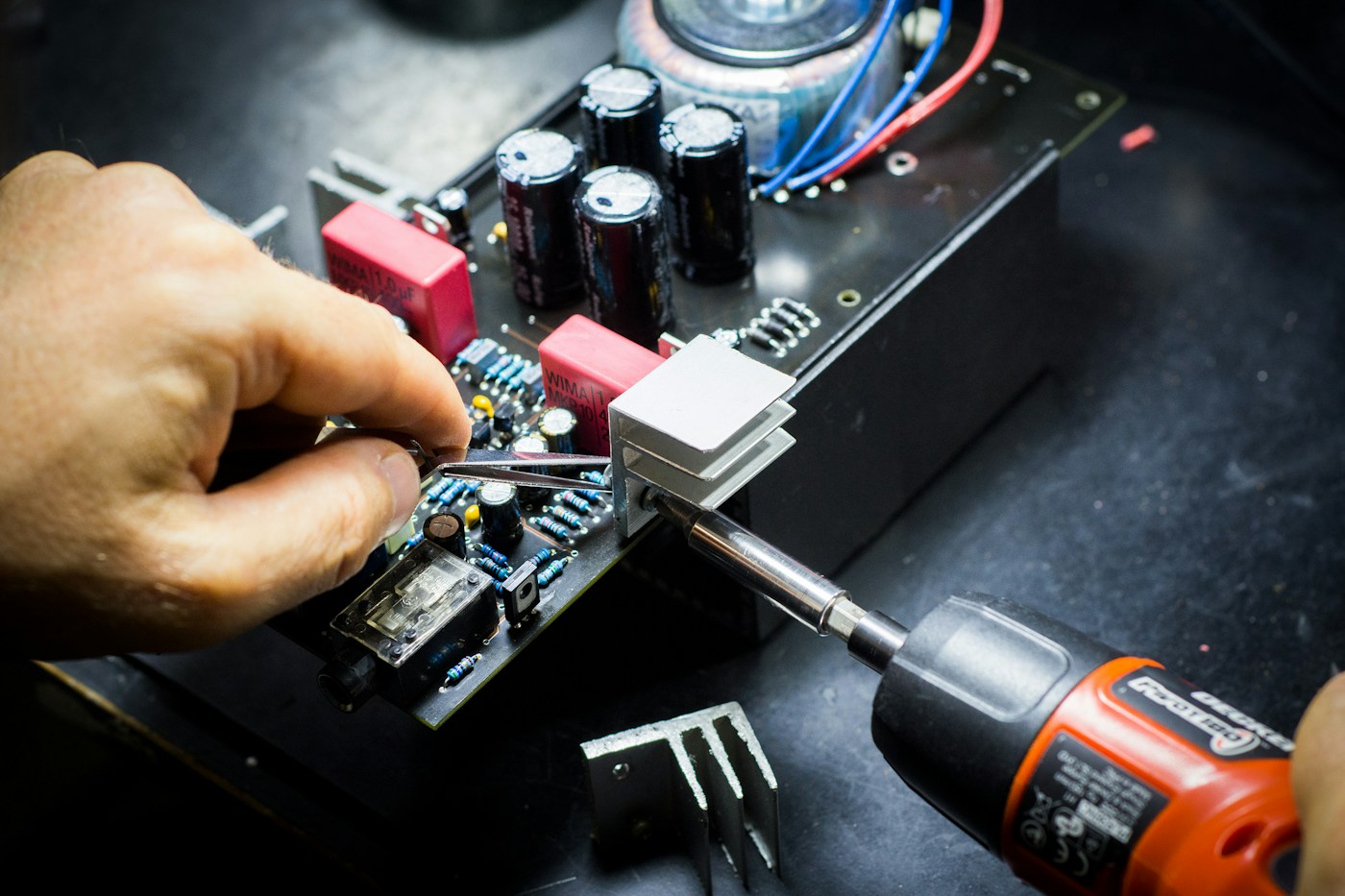
Autonomous Robotics with ROS course visual Advanced course · 12 weeks

What this course is about

Autonomous robots depend on well-structured software that can perceive, reason and act reliably. ROS 2 provides the architecture that makes that possible, and this advanced course teaches you to use it with engineering discipline.

You will build modular packages, integrate sensor data, implement localisation and mapping, and configure navigation for a mobile robot. Work begins in simulation, where failure is safe and repeatable, before moving to hardware where safety and testing become critical.

The capstone asks you to deliver an autonomous robot system with reproducible tests, documented limitations and a clear safety review.

What you will be able to do

Explain ROS 2 architecture, nodes, topics, services and actions.
Build modular robot software using packages, launch files and parameters.
Integrate sensor data into perception and control pipelines.
Implement localisation and mapping for a mobile robot.
Configure navigation and motion planning for autonomous behaviour.
Test robot behaviour safely in simulation before hardware deployment.
Debug distributed robotic systems with logs, topics and runtime inspection.
Deliver an autonomous robot capstone with reproducible test evidence.

Skills you will develop

ROS 2 architecture Robot software packages Sensor integration Localisation and mapping Navigation and planning Simulation testing Safety review Technical documentation

Course modules

Understand the architecture and tooling that make modular robot software possible.

  • Robotics software architecture
  • Nodes and executors
  • Topics and messages
  • Services and actions
  • Packages and workspaces
  • Launch files and parameters
  • Development workflow
Lessons
  • Robotics software architecture · 45 minutes
    Guided lesson on Robotics software architecture. Includes explanation, worked examples and a short applied activity.
  • Nodes and executors · 60 minutes
    Guided lesson on Nodes and executors. Includes explanation, worked examples and a short applied activity.
Approximate study time: 2 weeks

Integrate sensors into a robot system and manage frames, timing and noisy data.

  • Sensor types and interfaces
  • Lidar and depth data
  • Camera pipelines
  • Time synchronisation
  • Coordinate frames and transforms
  • Sensor fusion basics
  • Simulation environments
Lessons
  • Sensor types and interfaces · 45 minutes
    Guided lesson on Sensor types and interfaces. Includes explanation, worked examples and a short applied activity.
  • Lidar and depth data · 60 minutes
    Guided lesson on Lidar and depth data. Includes explanation, worked examples and a short applied activity.
Approximate study time: 2 weeks

Build the spatial understanding a mobile robot needs to move safely and consistently.

  • Odometry
  • Probabilistic localisation
  • Map representations
  • SLAM fundamentals
  • Sensor calibration
  • Map quality assessment
  • Failure conditions
Lessons
  • Odometry · 45 minutes
    Guided lesson on Odometry. Includes explanation, worked examples and a short applied activity.
  • Probabilistic localisation · 60 minutes
    Guided lesson on Probabilistic localisation. Includes explanation, worked examples and a short applied activity.
Approximate study time: 3 weeks

Plan and execute movement while respecting the robot, the environment and safety limits.

  • Kinematics and constraints
  • Path planning
  • Costmaps
  • Obstacle avoidance
  • Navigation stack configuration
  • Safety limits
  • Testing and tuning
Lessons
  • Kinematics and constraints · 45 minutes
    Guided lesson on Kinematics and constraints. Includes explanation, worked examples and a short applied activity.
  • Path planning · 60 minutes
    Guided lesson on Path planning. Includes explanation, worked examples and a short applied activity.
Approximate study time: 3 weeks

Deliver a complete autonomous robot system with evidence, safety review and documentation.

  • System architecture
  • Simulation testing
  • Hardware integration
  • Safety review
  • Field testing
  • Documentation and demonstration
Lessons
  • System architecture · 45 minutes
    Guided lesson on System architecture. Includes explanation, worked examples and a short applied activity.
  • Simulation testing · 60 minutes
    Guided lesson on Simulation testing. Includes explanation, worked examples and a short applied activity.
Approximate study time: 2 weeks

How you apply the learning

Assignment 1

Node and Topic Lab

Build a small ROS 2 package with publisher and subscriber nodes, launch files and parameters, and verify behaviour with runtime inspection.

Assignment 2

Sensor Integration Report

Integrate a simulated sensor into a robot pipeline, document frame transforms and demonstrate safe handling of missing or noisy data.

Assignment 3

Navigation Test Plan

Design and run a navigation test in simulation, record failures and explain the tuning decisions that improved performance.

Project work that makes learning visible

Project

Autonomous Robot Capstone

Build a simulated robot that perceives its environment, localises, plans a route and navigates safely, with reproducible test evidence.

Project

Robotics Safety Review

Review a robot system for physical, software and operational hazards, and document safety limits, testing and human override procedures.

How your work is reviewed

ROS package labs, a sensor integration report, a navigation test plan and an autonomous robot capstone assessed on safety, reproducibility and documentation.

Certification requirements

A certificate of completion is issued after all modules, assignments and the assessed capstone are completed and reviewed. Learners must demonstrate a working robot system and supporting test evidence. Completion recognises school coursework and does not imply external accreditation.

Continue exploring

Other courses to explore.

Introduction to Robotics and Automation learning visual Beginner
Robotics and Automation 6 weeks ₦50,000

Introduction to Robotics and Automation

A practical introduction to robot components, Arduino-based control, sensors, motors, automation concepts and safe robot building.

  • Explain what robotics is and describe major developments in the field.
  • Identify the main types of robots and explain how their designs reflect…
  • Describe the components and architecture of a simple mobile robot.
Internet of Things and Smart Devices learning visual Intermediate
Robotics and Automation 8 weeks ₦85,000

Internet of Things and Smart Devices

A practical Internet of Things course covering device architecture, sensors, connectivity, edge processing and cloud integration for smart, relia…

  • Explain the architecture of a complete Internet of Things system.
  • Select and interface sensors and actuators for a defined application.
  • Process analog and digital signals reliably in embedded firmware.